Lab Facilities
DWSL is equipped with state-of-the-art facilities that facilitate the broad spectrum of its research activities including a 3m fully anechoic chamber, a complete in-house circuit board fabrication facility, materials printer facility, programmable software defined radio testbeds, an extensive assortment of high frequency testing equipment, as well as several microwave and wireless systems analysis software packages.
Collaborative Research Space
The Materials for Electronic Smart Systems (MESS) facility represents a unique inter-disciplinary collaboration among faculty with research interests ranging between such diverse topics such as wireless communications, optics, robotics, entertainment engineering, and functional fabrics for the Internet of Things. The facility is a 10,000 sq. foot area within one block of 30th street train station in Philadelphia, a major transportation hub in the northeast corridor. The facility houses the Drexel Wireless Systems Laboratory (DWSL).
Lab Office and Conference Facilities
 |
 |
|---|---|
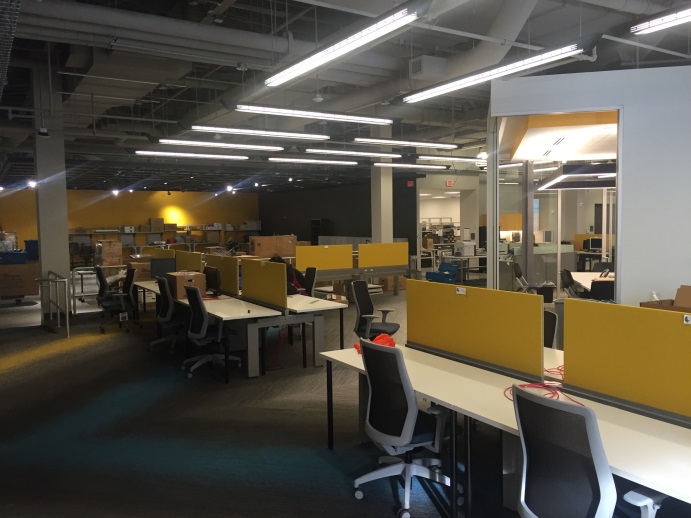
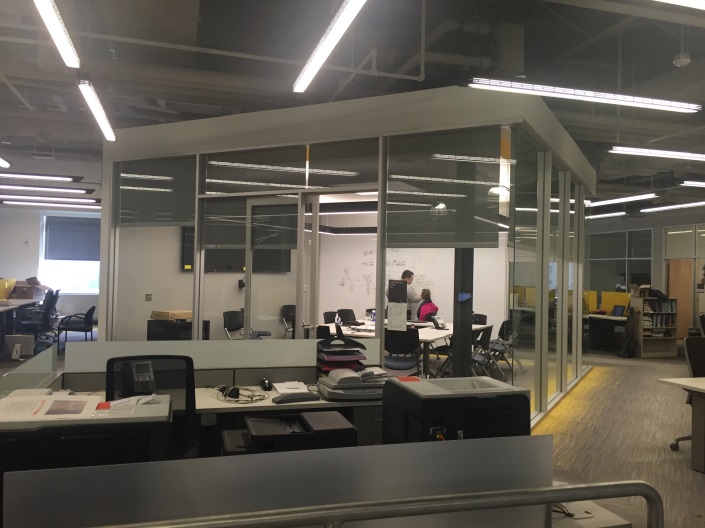
| Student & Staff Seating | Conference Room |
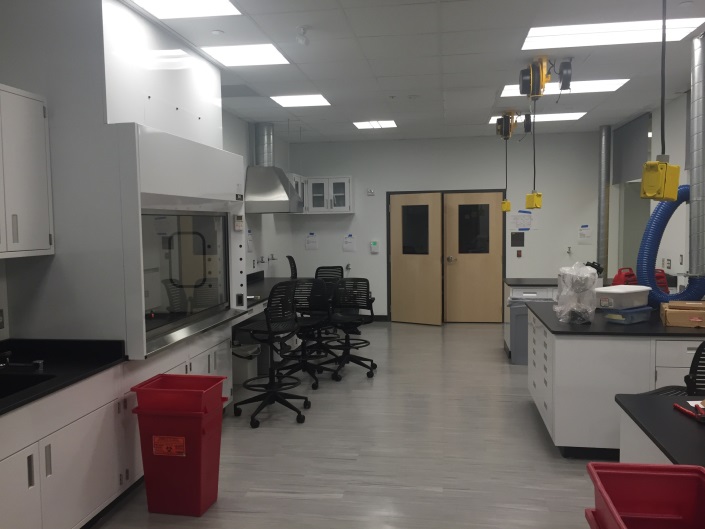
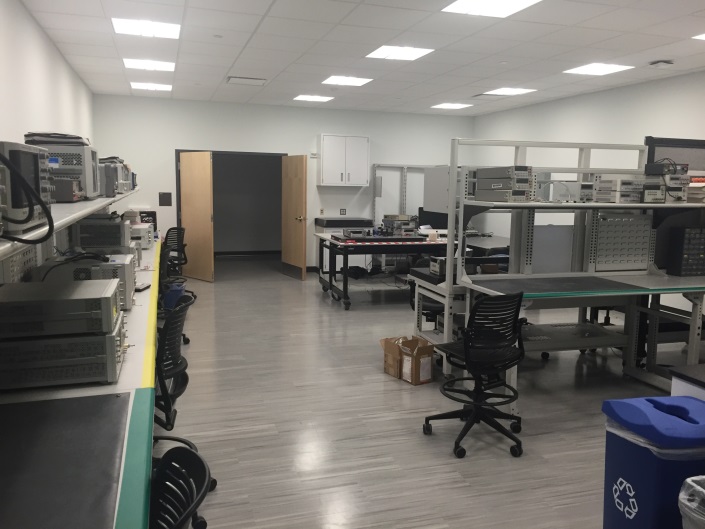
Primary seating for the lab consists of 8 enclosed offices, seating for 50 students/research staff, and a reconfigurable seating area that can accommodate 20 additional personnel. There are separate rooms for “dirty” fabrication including a fume hood, a room for wireless metrology equipment, an optics lab, a cooled server room, and a chemical storage room. There is also a conference room with whiteboard and audio/visual teleconferencing abilities that is available for scheduling. Tours of the facility available upon request.
 |
 |
|---|---|
| Fabrication area | Wireless Metrology Room |
Anechoic Chamber
The Drexel University Anechoic Chamber Testing (DUACT) facility, installed in 2007 by TDK RF Solutions is a custom design room that is isolated from external electromagnetic radiation sources and prevents the internal reflection of electromagnetic waves. It is used to perform antenna and radiating system characterization in support of DWSL research efforts. Electromagnetic absorbers used in the chamber are rated to perform at frequencies between 100 MHz and 100 GHz. DUACT is a state of the art research facility in which military, industrial, and academic institutions can test and develop next generation communication systems.
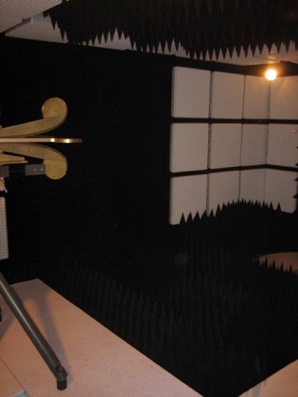
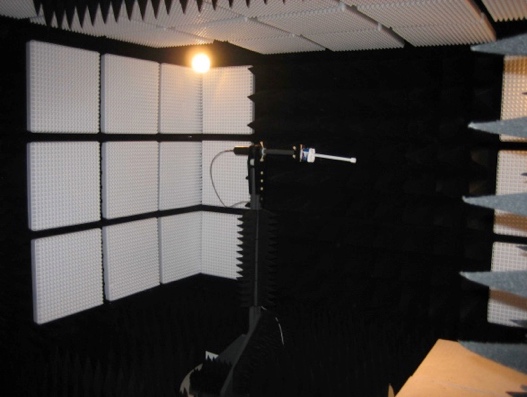
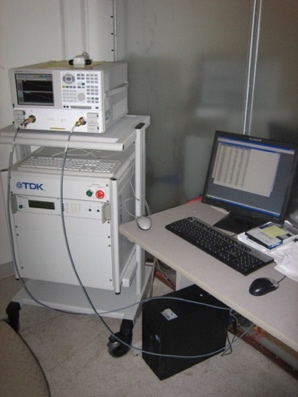
Drexel University Anechoic Chamber Testing (DUACT) Facility
Reverberation Chamber
DWSL’s reverberation chamber was installed in January 2017 and features dual cavities that can be fully isolated from each other or coupled together based on measurement needs. Similar to the anechoic chamber above, the reverb chamber is also isolated from outside electromagnetic radiation sources. The chamber, from ETS Lindgren, is uniquely located within DWSL’s lab space. By specifically exciting the resonance of the cavities, the chamber offers repeatable over-the-air measurements. The chamber’s behavior is user-adjustable and can be set depending on the upcoming experiment.
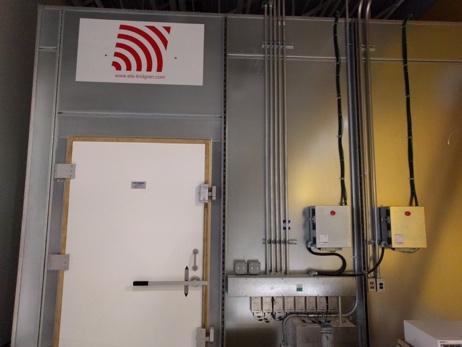
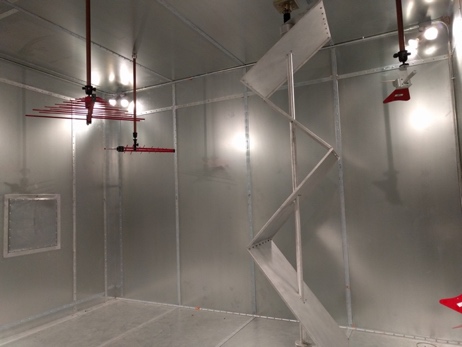
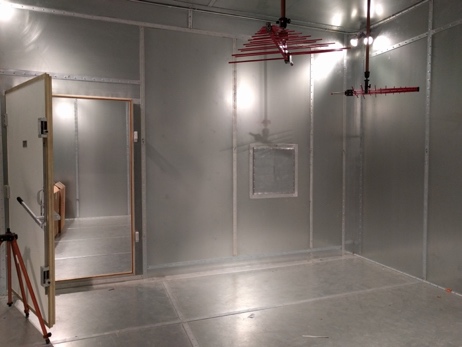
DWSL Reverberation Chamber Facility
Ceiling Grid Measurement “Arena”
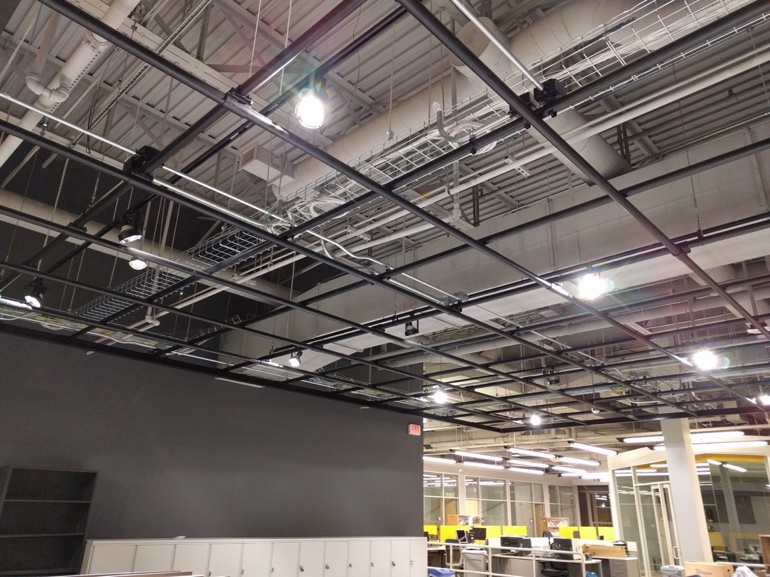
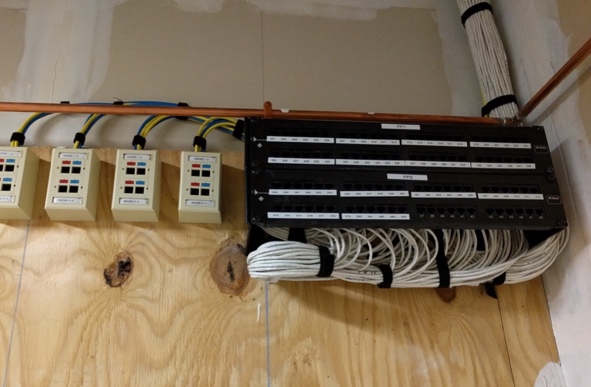
The lab contains a ceiling based “arena” which will be used to mount software defined radios, RFID, and other sensor technologies for over the air testing. The grid, which was built as a part of the lab renovations that were completed in January 2017, is designed to be 33 ft by 36 ft and have a spacing of 3 ft. The grid structure is currently available for use and features power and network connectivity at most of the junctions in the grid. The network connectivity is routed to a patch panel in the nearby server room and is accessible directly within DWSL for any network adjustments. Currently there are 84 Ethernet ports available for use. These network connections can be modified to be local-only for internal measurements or accessible via the Internet for remote measurements.
 |
 |
|---|---|
| Ceiling grid structure | Server room patch panel |
Capital Equipment
DWSL has a wide variety of capital equipment for antenna, radio frequency, and communication system management including the below:
| Model | Description |
|---|---|
| EMSCAN RFxpert | Real-time, compact bench-top antenna measurement equipment to get antenna pattern measurement in under a second without an anechoic chamber. |
| Agilent N6030A | Arbitrary Waveform Generator |
| Agilent N5230A | PNA Series 2-port Network Analyzer |
| 300 kHz to 13.15 GHz | |
| (Options 1CM, N4691B) | |
| Agilent N5230A-PA-L | PNA Series 4-port Network Analyzer |
| 300 kHz to 20.00 GHz | |
| Aeroflex WiMAX I/Q | I/Q generator for WiMAX testing |
| Mint WiMAX PCT | Protocol conformance testing equipment for the WiMAX standard |
| Spirent SR5500 | 2x2 MIMO Channel Emulator |
| Agilent Probe Kit | Dielectric Probe Kit |
| Agilent E4420B | 2 GHz Series Signal Generator |
| Agilent DSO90604 | 6 GHz Infiniium oscilloscope |
| 4 channel, 20 GSa/s per channel | |
| Agilent E8267D | 33 GHz vector signal generator with wideband I/Q inputs |
| Tektronix 1400 | GigaBert analyzer and generator |
| 1 to 1000-Mbps pattern generator/ analyzer | |
| TDKRF PP-02 | Field probe positioner for remote x-y positioning in EMC test environments |
| TDKRF SI-300 | Multi-purpose controller system interface designed for manual or computer controlled EMC test systems |
| Agilent E4404B | ESA-E Spectrum Analyzer – 9kHz to 6.7 GHz |
| (Options B74, 229, B70, 903) | |
| Agilent E4438C | ESG Vector Signal Generator – 250 kHz to 6 GHz |
| (Options 506, UNJ) | |
| AR LN1G11 | Broadband low noise amplifier |
| Agilent 33250A | 80 MHz Arbitrary Waveform Generator |
| (Options ABA, 903) | |
| Agilent E3630A | Laboratory DC Power Supply – Triple Output (2) |
| (Options OEM, 903) | |
| Agilent 34401A | Digital Multimeter |
| (Options 001,0B0, 120, 903) | |
| Tessco 44722 | 2.400 – 2.4835 GHz 6 dBi Omni Antenna (8) |
| Tessco 499367 | 5.725 – 5.875 GHz 9 dBi Omni Antenna (8) |
Software Defined Radio Capabilities
DWSL owns (12) Ettus USRP N210 and (2) USRP X310 nodes. The USRP N210 offers high-bandwidth, high-dynamic range processing capability. The Gigabit Ethernet interface of the USRP N210 allows high-speed streaming capability up to 100 MS/s in both directions (8-bit samples). The X310 features 160MHz frontend bandwidth with improved processing.
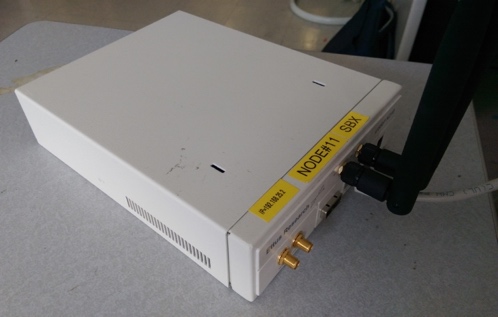
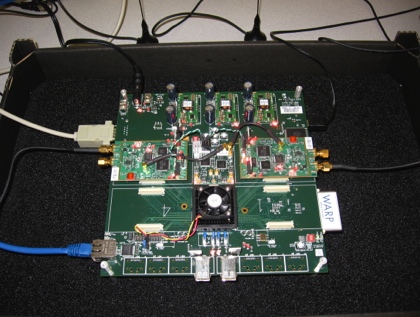
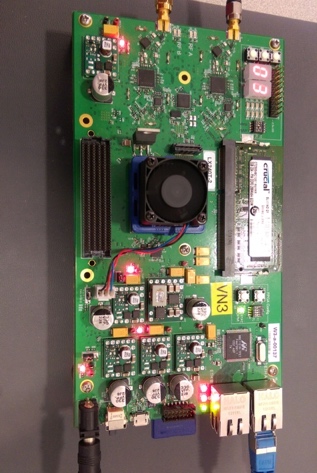
USRP N210 node, WARP MIMO node & WARP v3 node
DWSL owns 5 MIMO nodes of the Wireless Open-Access Resarch Platform (WARP) developed by Rice University. Baseband processing in WARP is achieved using a Xilinx Virtex-II PRO FPGA capable of processing data at 100s of Megabits per second with onboard embedded PowerPC processor cores. Each WARP node daughtercard has ISM and UNII band radio transmitters with dual 65 MS/sec 14-bit ADCs and dual 125 MS/sec 16-bit DACs. This platform is flexible, allowing for software reconfigurability of all layers of the protocol stack. WARP is also modular so that new daughtercard modules can be implemented to prototype communication networks with other frequency bands, radio standards, or communication modalities (e.g., optical, ultrasound). Programming WARP can be accomplished using a variety of interfaces ranging from low level VHDL code, Xilinx System Generator, and Matlab for physical layer algorithm development and Platform Studio in C/C++ for implementing higher layers of the protocol stack. Furthermore, WARP has a large community of users to provide technical support and a vehicle for dissemination of research results and newly developed communication and networking techniques. Drexel has also acquired (5) WARP v3 modes, which have been integrated with reconfigurable antennas for testing.
Aerial Wireless Research Capabilities
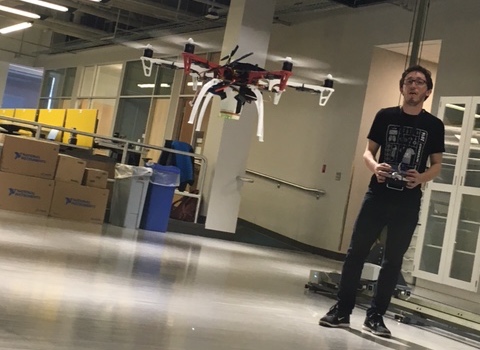
DWSL has built an aerial wireless research platform, consisting of a hexacopter UAV with an SDR system payload. The SDR system payload consists of USRP B200-mini SDR with a Raspberry Pi 3 host, and a reconfigurable antenna. The UAV can be utilized for experiments to characterize, improve, and secure wireless links between UAVs and ground users. The aerial wireless research platform is battery powered and has a light-time of 12-15 minutes. The vehicle is remotely controlled with a FrSky Taranis X9D transmitter, and can be flown both indoors and outdoors. When operating outdoors, the onboard Naza-M V2 flight controller is capable of GPS assisted flight control.
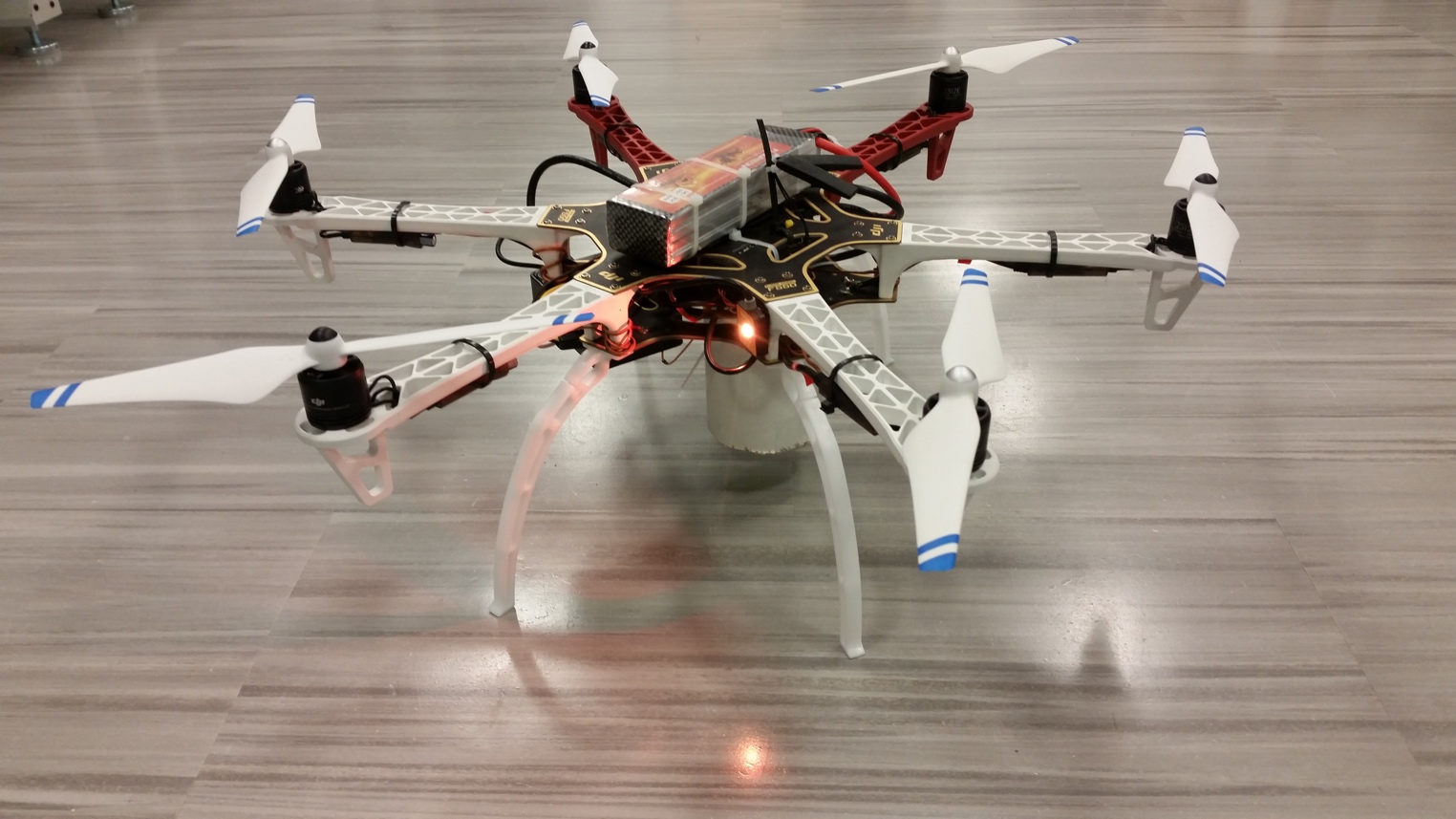
Aerial Wireless Research Platform
Antenna Fabrication Facilities
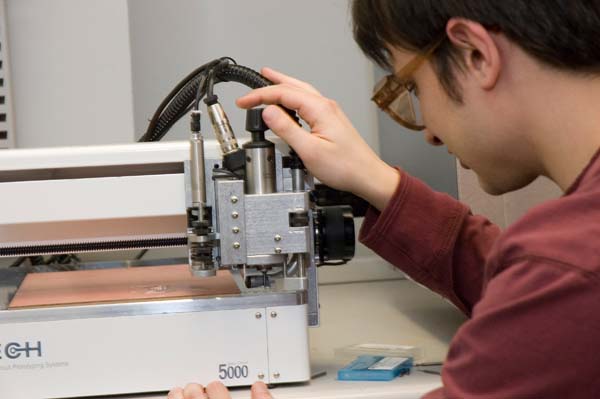
DWSL owns a printed circuit board milling machine from T-Tech. The laboratory also contains all the necessary accessories for fabricating multi-layer (up to 6 layers) circuit boards, vias for inter-layer connections, and solder masks. Import of various CAD formats is possible with this fabrication tool. Milling of antennas and circuit boards has been accomplished on a variety of substrates including FR-4 and Rogers Duroid.
Printed Circuit Board Milling Machine Materials Printer
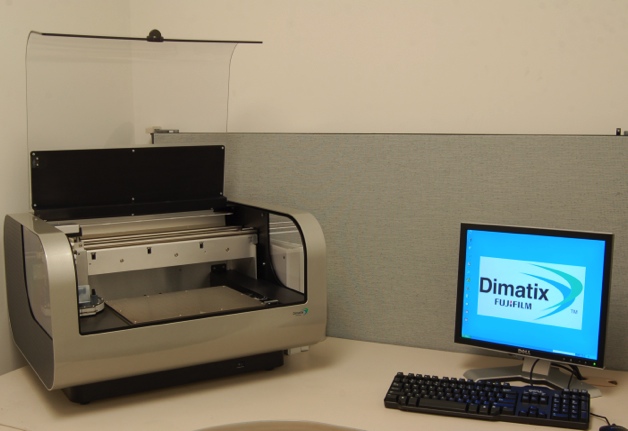
For printing conformal antennas out of unconventional materials on non-traditional substrates, the Fujifilm-Dimatix DMP-2831 materials printer makes use of a unique fluid deposition system including a MEM print-head that uses an electrically controlled membrane to eject fluids. The printer can deposit controllable drop sizes down to the pico-Liter scale, and is capable of printing on virtually any substrate. The print cartridges are filled easily via syringe, and the correct printing parameters can be observed through the use of a drop-watching camera which puts the 16 nozzles of the print head under magnification. To make pattern design simple, the optional Gerber file importing software was purchased allowing virtually any design to be created in a number of CAD environments and imported directly into the printer. Once the printing if finished, an included fiducial camera puts the substrate under magnification so that it can be viewed on the single-drop scale to ensure the proper overlapping and layout.
WiMAX Base Station Over-the-Air Testing Capabilities
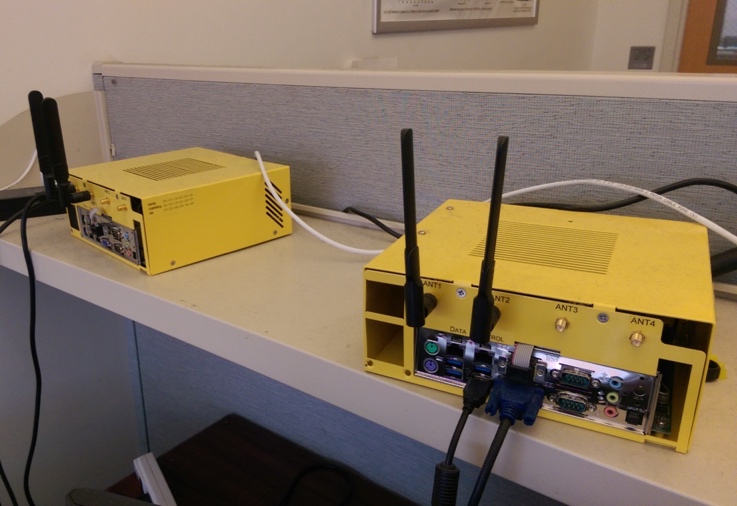
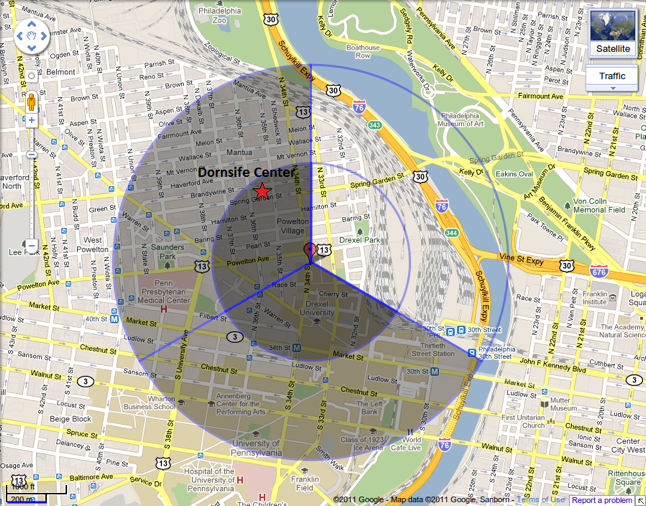
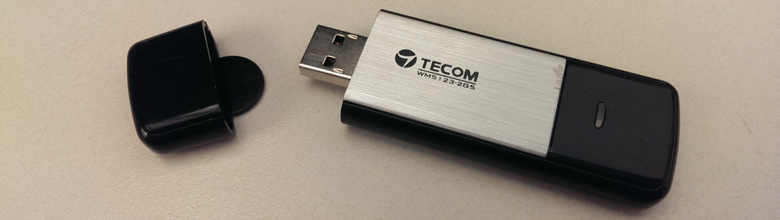
DWSL, as a part of the GENI network, has access to two AirSpan Air4G WiMAX base stations. These base stations are installed on top of the tallest building on Drexel’s campus, Millenium Hall. Each equipped with 120deg sector antennas, the setup provides coverage to on- and off-campus housing areas in addition to classroom areas and the Dornsife Center, which provides support to the Powelton Village community. DWSL hold a valid FCC experimental license to operate these base stations within the assigned spectrum. We have full control over the base station with the ability to modify settings such as transmit power (staying within license terms), modulation, and subscriber management. We also have supporting hardware for campus-wide measurement campaigns including “Yellow Nodes” developed by Rutgers University (battery and AC operated), Samsung Galaxy S3 mobile phones, USB dongles for laptop connectivity, and WiMAX-to-WiFi gateway router. We have the ability to perform simple ping tests to check for connectivity to more complicated video streaming and mobility measurements. The back-end of the system is currently controlled manually by our controller PC. This PC is configured with DHCP server, which automatically assigns IP addresses for WiMAX nodes that are joining the network. Through the use of the USB dongles, we have also integrated reconfigurable antennas for use in our campus WiMAX network.
 |
 |
 |
|---|---|---|
| Yellow Nodes from Rutgers | University Coverage Area Map (Dornsife Center Marked) | USB WiMAX Dongle |